
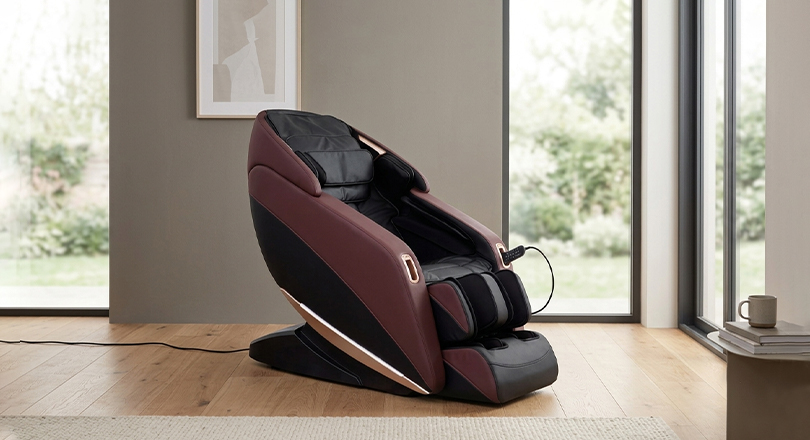
Modern living moves at an intense pace, forcing you to constantly juggle professional demands, family obligations, and a never-ending to-do list. This continuous pressure builds up physically, leaving you with tight shoulders, a stiff neck, and a mind that refuses to slow down at night. Traditional relaxation tools often fail to help because they rely on predictable, repetitive patterns that do not address your specific physical needs at that exact moment.
Intelligent automation changes this dynamic entirely, utilizing advanced sensors and adaptive algorithms to analyze your body and deliver a customized, deeply calming experience within moments of sitting down.
The Preliminary Scan: Mapping Your Unique Physical Structure
Every individual possesses a distinct physical build, meaning a generic, uniform approach to relaxation will always yield disappointing results. When you sit in a standard mechanical seat, the rollers move along a fixed path, often missing your specific tension points or applying pressure unevenly. This mismatch happens because the machinery does not know your height, your spinal alignment, or where your shoulders actually sit.
An intelligent system eliminates this guesswork by initiating an automated physical assessment the moment you select a routine. Optical and pressure sensors glide along your back to measure your exact spinal curvature and physical proportions.
The internal computer processes this spatial data quickly to create a digital map of your torso. By establishing these precise boundaries, the mechanisms ensure every subsequent movement aligns with your anatomy, preventing discomfort and maximizing the efficiency of the session.
Biometric Feedback: Detecting Tension Areas in Real Time
Physical stress does not distribute itself evenly across your body; it concentrates in specific zones depending on your daily habits, posture, and activities. A long drive might leave your lower back tight, while hours of typing strain your upper shoulders.
A conventional chair cannot differentiate between loose muscle tissue and a dense knot, passing over both with the exact same speed and intensity.
Automated seating resolves this limitation through the implementation of continuous biometric monitoring. As the mechanisms traverse your back, they encounter varying levels of muscular resistance. Advanced algorithms interpret high resistance as a localized accumulation of physical tension.
Instead of continuing along a rigid path, the system adjusts its behavior on the spot, slowing down its pace and increasing local pressure to systematically address the knot. This real-time adaptability ensures that your majorly troubled areas receive concentrated attention.
Algorithmic Variety: Breaking the Cycle of Mechanical Routine
When muscle tissue is subjected to the exact same mechanical pattern repeatedly, it quickly adapts, a phenomenon known as muscle accommodation. Standard chairs offer a limited selection of pre-programmed cycles that operate on simple loops. After a few weeks of use, your body anticipates every single movement, which significantly reduces the psychological and physical effectiveness of the relaxation session.
Intelligent chairs counter this by utilizing algorithmic variety to generate dynamic movement sequences. Rather than relying on rigid, unchanging programs, the system draws from a vast library of techniques, combining kneading, tapping, rolling, and compression in real time.
The software varies the rhythm, depth, and sequence based on your current physical data and historical usage. This constant variation keeps your muscles responsive, ensuring that each session feels fresh, engaging, and highly effective at dismantling stress.
Environmental Synchronization: Engaging Multiple Senses Simultaneously
True physical relaxation is difficult to achieve if your mind remains active, cycling through worries and daily responsibilities. Mechanical rubbing alone is frequently insufficient to induce a state of calm if your surroundings remain distracting. A comprehensive solution must address your entire sensory environment, transitioning your nervous system from a state of high alertness into a peaceful, resting mode.
Modern automated chairs achieve this transition by synchronizing multiple environmental factors during your session. The system coordinates the physical manipulation with zero-gravity positioning, which tilts the chassis to distribute your weight evenly and reduce compression on your spinal column.
Concurrently, localized heating elements deliver gentle warmth to soften tight fibers, while integrated audio systems shield you from ambient household noise. This multi-sensory approach addresses both physical fatigue and mental distraction simultaneously, facilitating a rapid transition into deep calm.
Historical Learning: Tailoring Experience Through Accumulated Data
Your body changes from day to day, but it also exhibits long-term patterns based on your profession, exercise habits, and lifestyle choices. A system that sees you like a complete stranger every time you sit down misses an opportunity to provide deeper comfort. Without memory, a machine cannot anticipate your recurring needs or refine its delivery over multiple weeks of use.
Intelligent relaxation tools incorporate machine learning capabilities to bridge this gap between separate sessions. The software saves data regarding your preferred intensity levels, the areas where it consistently encounters muscle resistance, and the times of day you choose to relax.
Over time, the device utilizes this accumulated knowledge to automatically suggest customized routines when you sit down. This creates an evolving relationship between user and machine, where the technology becomes increasingly attuned to your lifestyle.
Continuous Software Evolution: Upgrading Functionality Over Time
A traditional piece of furniture begins to age the moment it arrives in your home, with its features remaining locked in the past as technology advances. If a new relaxation technique is discovered or a better tracking methodology is developed, older hardware cannot adapt. This limitation often leaves users feeling stuck with obsolete machinery after just a couple of years.
Automated chairs circumvent this issue by utilizing wireless network connectivity to download regular software updates directly from the developer. These digital updates refine the tracking algorithms, introduce brand new compression sequences, and improve the responsiveness of the internal sensors.
By continuously updating the software backbone, the manufacturer ensures your equipment gains new capabilities over time. This keeps your home relaxation routine aligned with modern engineering standards without requiring you to replace your physical asset.
Multi-User Adaptability: Managing Household Profiles Effortlessly
In a shared household, a single piece of equipment must accommodate vastly different body types, preferences, and daily stress levels. When multiple individuals use a non-intelligent chair, they must manually alter the settings, a process that involves scrolling through confusing menus and disrupting the peaceful environment. This operational friction often discourages family members from using the device altogether.
An automated chair removes this friction by incorporating intelligent multi-user profile management. Utilizing integrated voice activation or biometric recognition, the chair immediately identifies who is sitting in it. The system immediately recalls that individual's unique spinal measurements, past session history, and preferred pressure settings.
This automated reconfiguration allows every member of the household to enjoy a highly personalized relaxation experience, making the device a versatile and easily accessible shared resource for the entire home.
Intelligent Air Compression: Supporting the Circulatory System
While mechanical rollers focus intensely on the muscles along your spine, your extremities also carry significant amounts of physical fatigue. Your calves, feet, and forearms frequently experience tightness and a feeling of heaviness after a long day of standing or moving. Standard chairs often neglect these areas entirely, focusing their mechanical components solely on the back and neck regions.
Intelligent chairs address the entire body by integrating a network of synchronized air cells throughout the chassis. These air chambers inflate and deflate according to a precise algorithm that coordinates with the movement of the back rollers. The system applies targeted compression to your limbs, helping to ease the sensation of heaviness in your legs and arms.
By combining this rhythmic compression with localized back manipulation, the chair provides a comprehensive, head-to-toe relaxation session that leaves your entire body feeling light and refreshed.